


Large format FDM printing
FDM 3D printing service across Canada
Cost-effective FDM 3D printing services for large parts and production runs. Build volumes up to 500mm with ABS, PLA, and PETG materials.
- Large Build Volumes
- Fast Turnaround
- Production Ready
- 24/7 Service
Quick stats
500mm
Max Build Size
15+
Materials
24h
Typical Lead Time
FDM prototyping services
FDM is the go-to choice for durable, reliable prototypes at the lowest cost per part. Our FDM printing service in Canada produces functional parts in real engineering thermoplastics — making it the most practical rapid prototyping option for large format 3D printing.
Large-format prototypes
Print parts up to 450mm in a single build — ideal for enclosures, housings, and architectural models that need real-world scale.
Functional testing
Produce durable and reliable prototypes in ABS, PETG, or Nylon for mechanical validation, fit checks, and thermal testing.
Jigs, fixtures & tooling
Custom production tooling printed on demand. Replace machined fixtures at a fraction of the cost with same-day turnaround.
Concept models & design validation
Go from CAD to physical model in hours. Validate ergonomics, proportions, and design intent before committing to production tooling.
Low-cost iteration
Print 3–5 design versions for the price of a single CNC part. Iterate faster and smarter with affordable FDM prototyping.
Technical deep dive
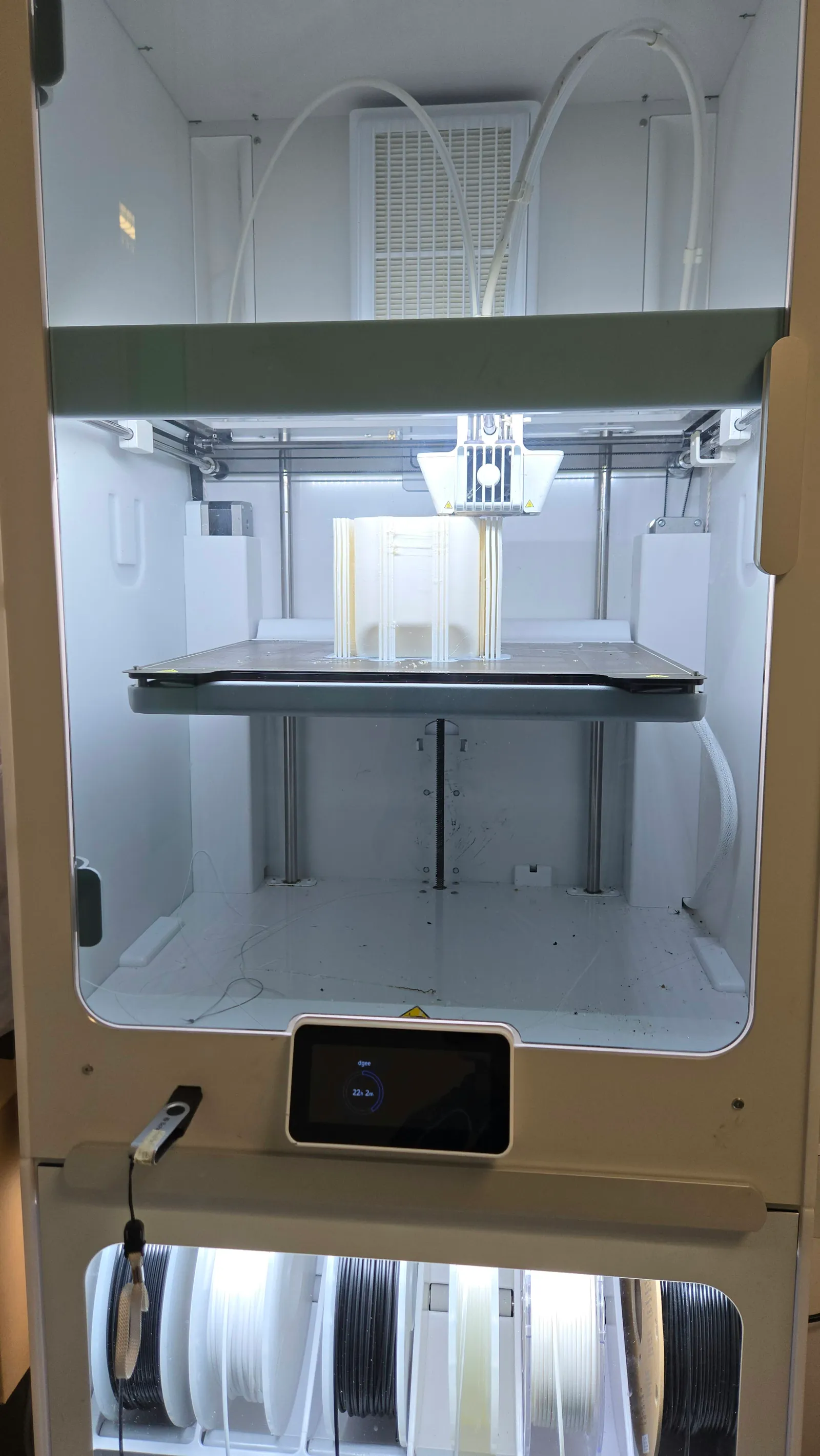
The FDM 3D printing process
Understanding our FDM workflow helps you design better parts and choose optimal settings for your application.
Still have questions?
Our FDM experts are here to help with technical questions and project consultation.
Our elite 3D printing & CAD workflow
1
Expert file analysis & slicing 30 min
We analyze your STL, STEP, or 3MF file for printability — checking wall thickness (1.2mm min recommended), overhang angles, and optimal orientation for maximum strength. Layer height, infill pattern, and support strategy are configured for your specific application.
2
Material & printer setup 15 min
Filament is loaded and pre-dried when needed (Nylon, PETG). The build plate is auto-leveled and nozzle temperature set precisely per material — PLA at 200–215°C, ABS at 230–250°C in a heated enclosure, PETG at 230–245°C.
3
Printing 2–48 hours
Thermoplastic filament is extruded through a precision nozzle (0.4mm standard) at 40–100mm/s, building your part layer by layer. Enclosed chambers prevent warping for ABS and Nylon. Multiple printers run simultaneously with real-time monitoring.
4
Post-processing 30 min – 2hours
Supports are removed and surfaces cleaned. Optional finishing includes acetone vapor smoothing (ABS), sanding, painting, heat-set threaded inserts, and CNC machining of critical dimensions.
5
Inspection & delivery 30 min
Every part is dimensionally verified with digital calipers and checked for defects. Standard shipping across Canada in 2–4 days. Montreal-area clients can choose same-day pickup.
FDM 3D printing applications
From functional prototypes to production parts, FDM printing offers versatility and cost-effectiveness for large-scale manufacturing needs.
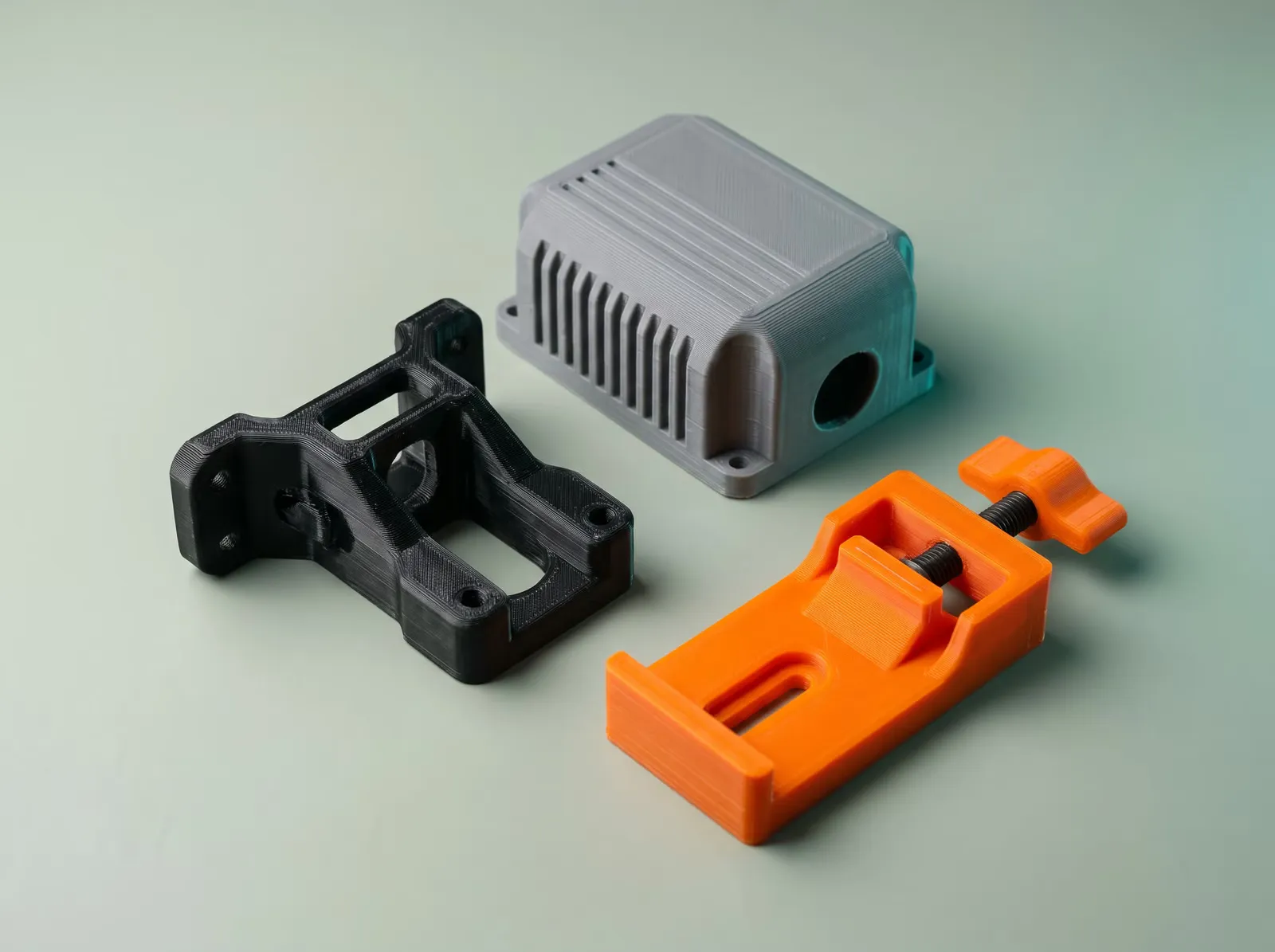
Functional prototypes
- Test fit, form, and function with durable FDM parts
Industries
Automotive
Aerospace
Industrial
Common applications
- Brackets
- Housings
- Jigs & Fixtures
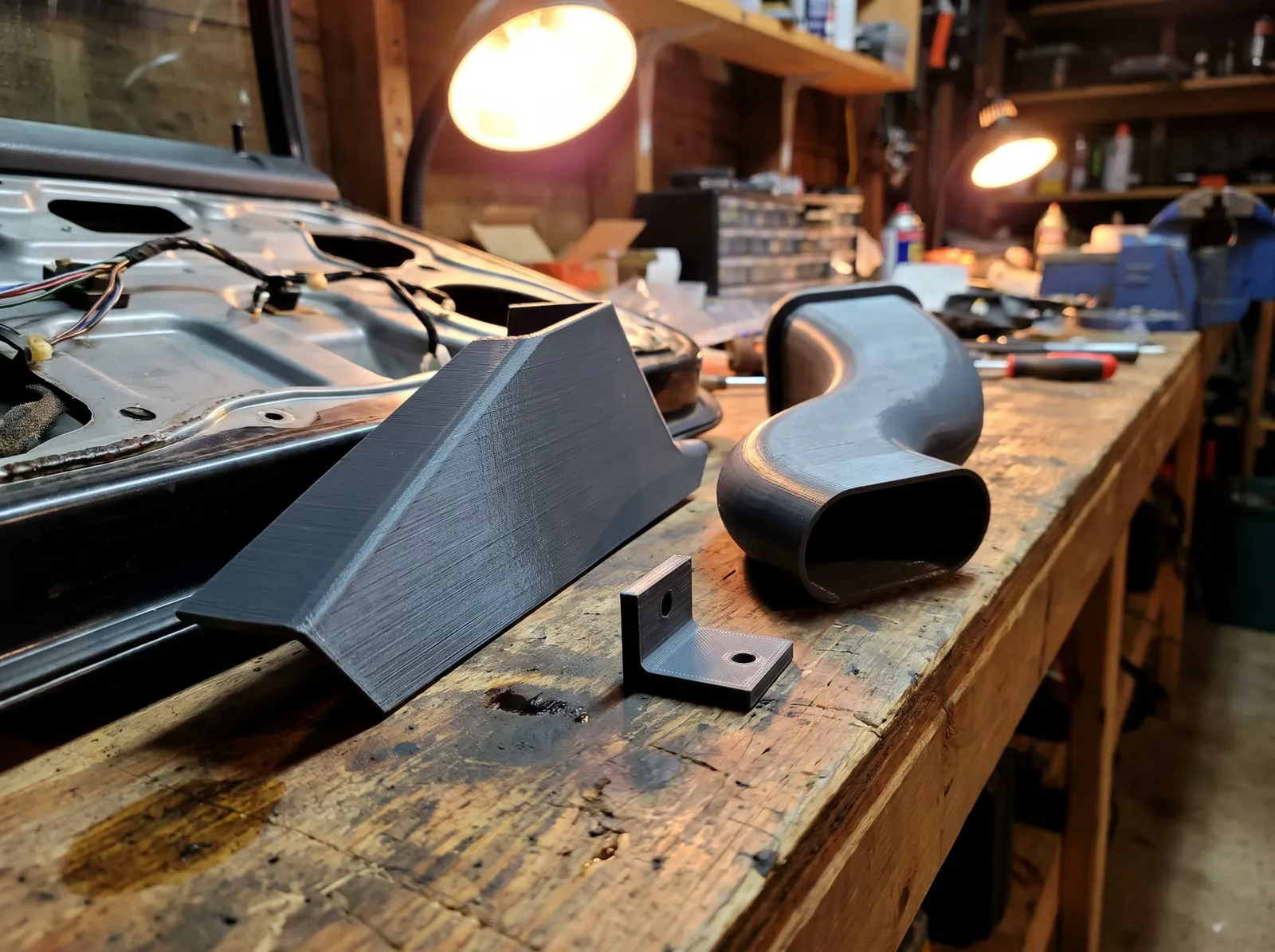
Automotive parts
- Custom automotive components and replacement parts
Industries
Automotive
Racing
Custom
Common applications
- Interior Trim
- Brackets
- Ducting
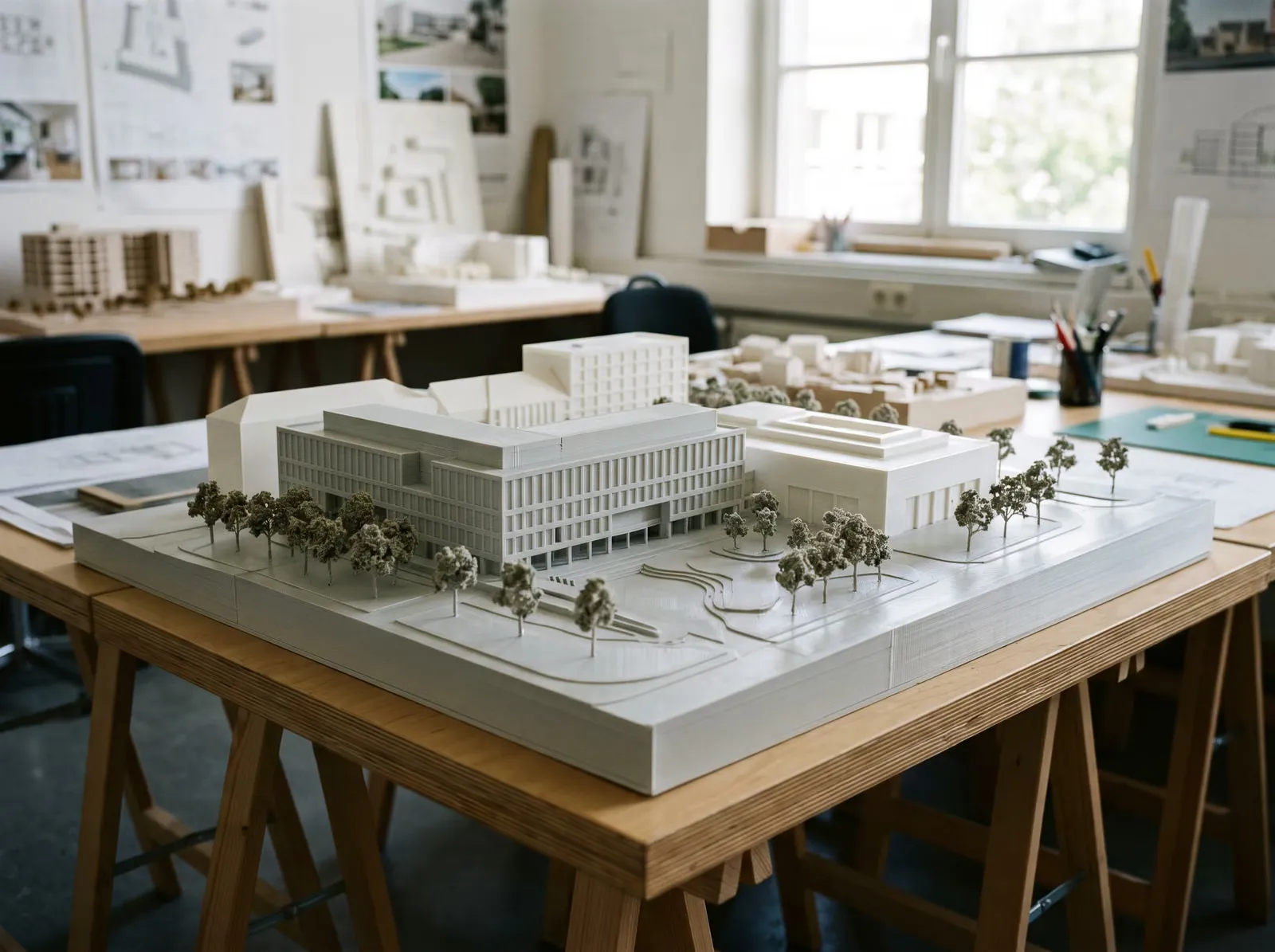
Architectural models
- Large-scale architectural and building models
Industries
Architecture
Construction
Real estate
Common applications
- Building Models
- Landscape
- Prototypes
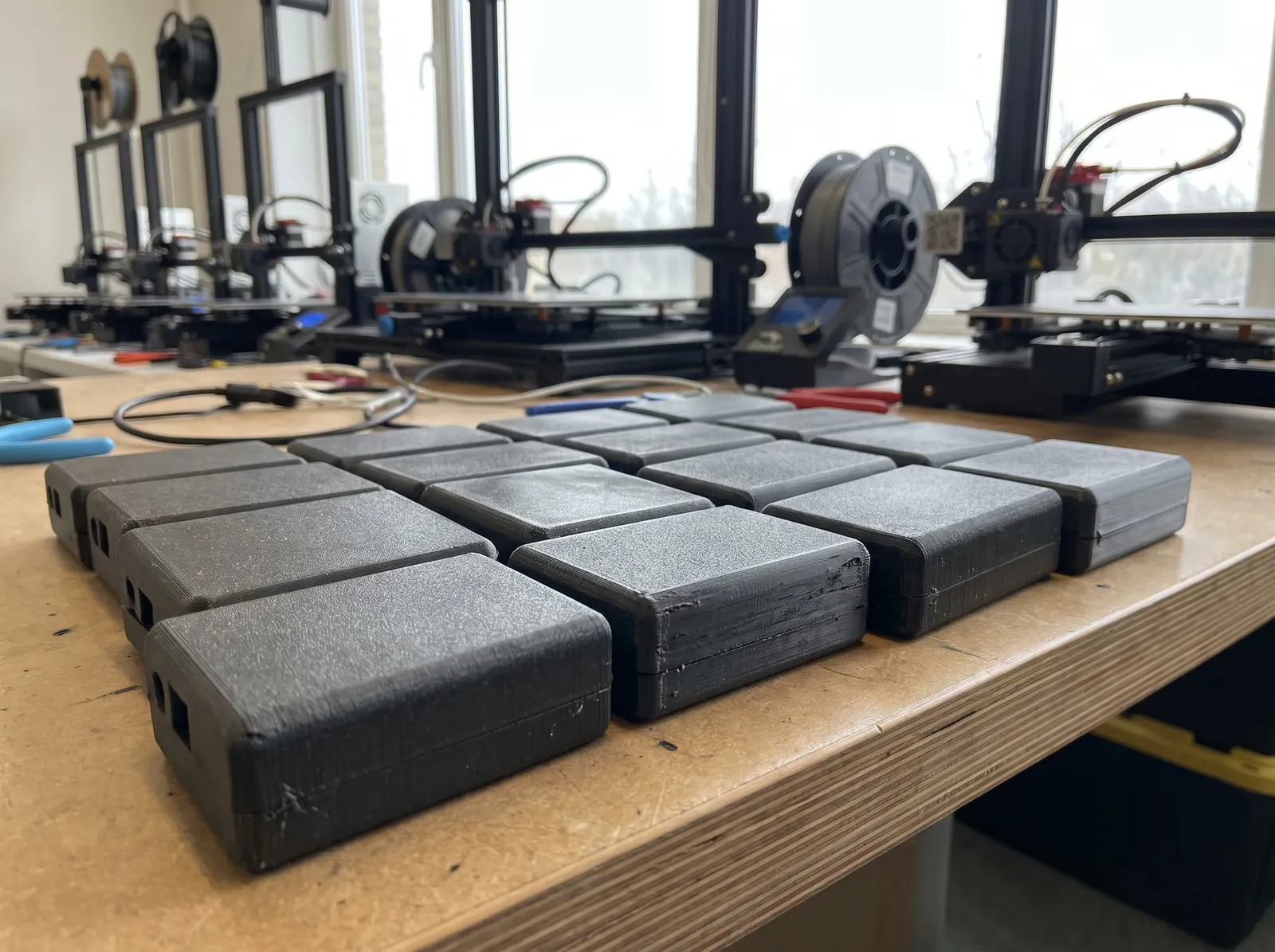
Production parts
- Low to medium volume production runs
Industries
Manufacturing
Consumer goods
Electronics
Common applications
- End-Use Parts
- Tooling
- Fixtures
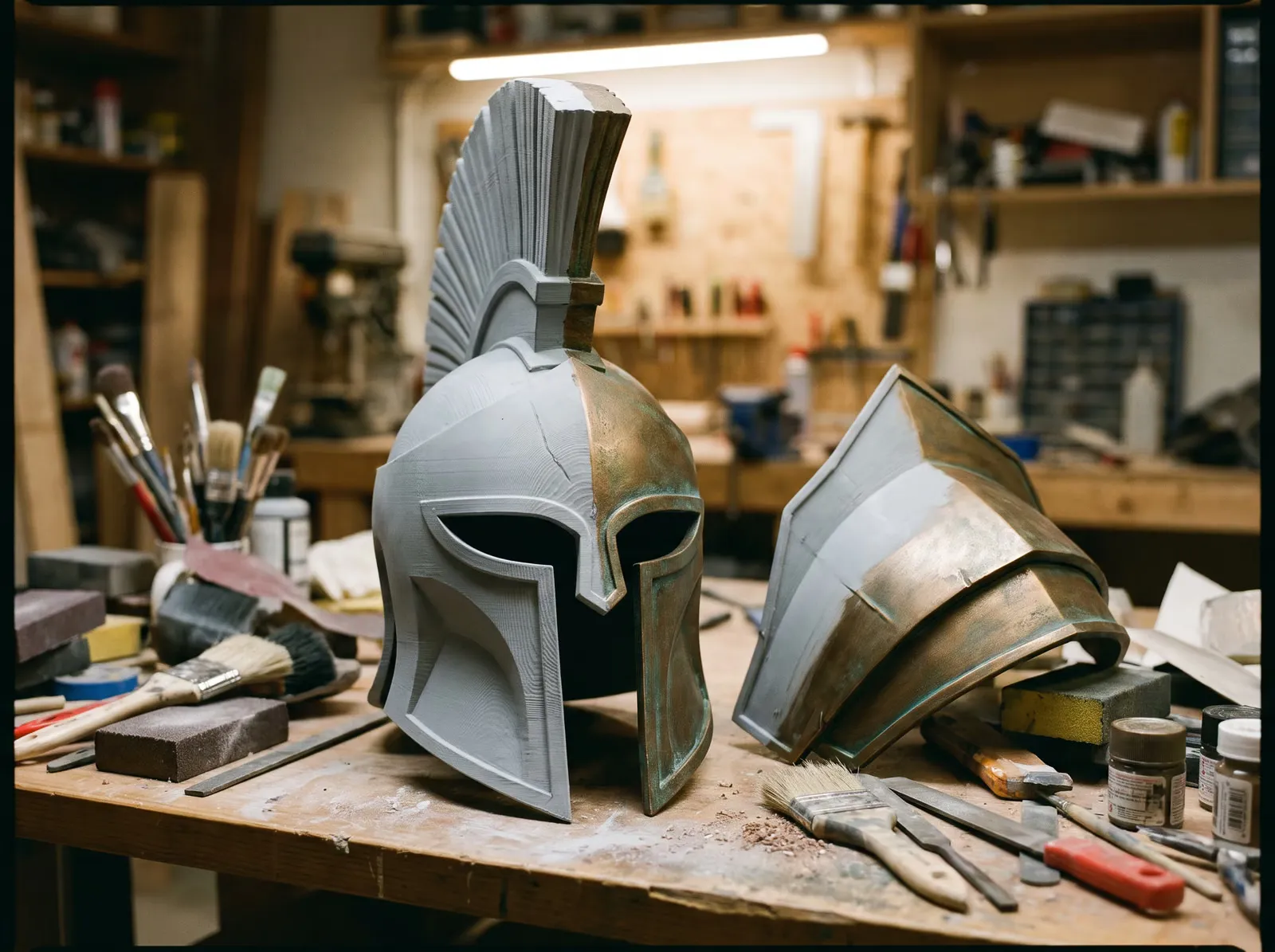
Props & cosplay
- Large costume pieces and theatrical props
Industries
Entertainment
Gaming
Theater
Common applications
- Helmets
- Armor
- Props
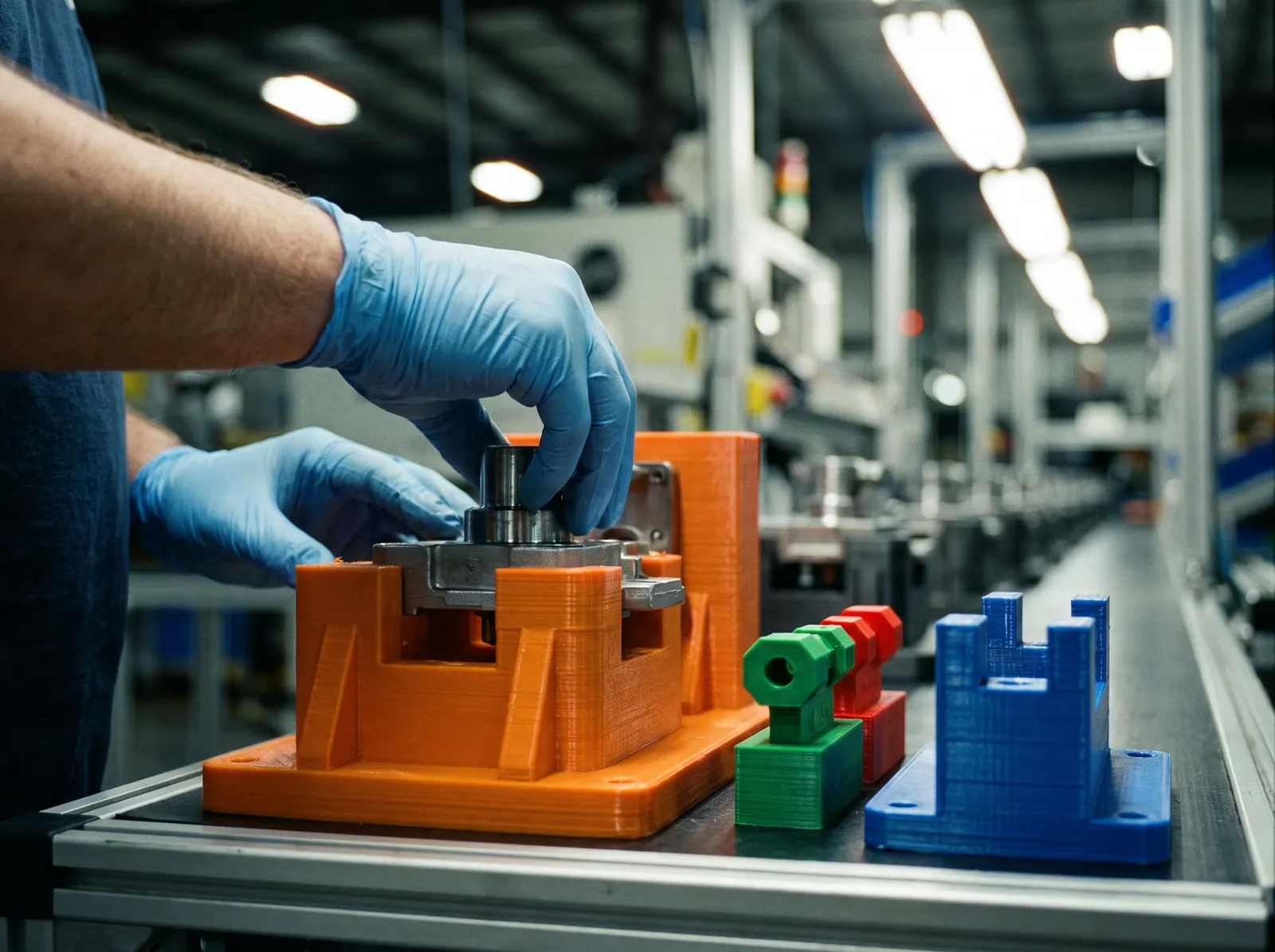
Industrial tooling
- Custom jigs, fixtures, and manufacturing aids
Industries
Manufacturing
Assembly
Quality control
Common applications
- Jigs
- Fixtures
- Gauges
FDM 3D printing materials
Choose from our extensive range of FDM materials, each optimized for specific applications and performance requirements. For current pricing, see our 3D printing cost guide .
PLA (polylactic acid)
$
Relative cost
Standard
Details
- Strength: Medium
- Max Temp:: 60°C
- Flexibility: Low
- Finish:: Smooth
Key features
Easy to print
Biodegradable
Low warping
Good detail
Best for
Details
- Prototypes
- Visual models
- Educational
- Art pieces
Available colors
White
Black
Gray
Red
Blue
Green
Yellow
ABS (acrylonitrile butadiene styrene)
$$
Relative cost
Engineering
Details
- Strength: High
- Max Temp::80°C
- Flexibility: Medium
- Finish:: Matte
Key features
Impact resistant
Chemical resistant
Post-processable
Durable
Best for
Details
- Automotive parts
- Electronics housings
- Tools
- Functional parts
Available colors
White
Black
Gray
Red
Blue
PETG (polyethylene terephthalate glycol)
$$$
Relative cost
Engineering
Details
- Strength: High
- Max Temp:: 70°C
- Flexibility: Medium
- Finish:: Clear/Glossy
Key features
Chemical resistant
Food safe
Recyclable
Crystal clear
Best for
Details
- Medical devices
- Food containers
- Protective equipment
- Display cases
Available colors
Clear
White
Black
Blue
Green
TPU (thermoplastic polyurethane)
$$$$
Relative cost
Flexible
Details
- Strength: Medium
- Max Temp:: 50°C
- Flexibility: Very High
- Finish:: Rubber-like
Key features
Flexible
Tear resistant
Non-slip
Shock absorbing
Best for
Details
- Gaskets
- Phone cases
- Shoes
- Automotive seals
Available colors
Black
White
Red
Blue
Clear
FDM vs SLA vs SLS comparison
Compare 3D printing technologies to choose the best solution for your project requirements.
Technology comparison
Feature FDM Fused Deposition SLA Stereolithography SLS Selective Laser Sintering Build Volume Up to 500mm³ Up to 200mm³ Up to 300mm³ Layer Resolution 0.1-0.3mm 0.025-0.1mm 0.1-0.15mm Material Cost Lowest Moderate Highest Support Required Yes Yes No Post-Processing Minimal Washing + Curing Powder Removal Production Speed Fast Medium Medium Durability High Medium Very High Best For Large parts, prototypes High detail, miniatures Complex geometry FDM recommended for
- Large format parts
- Cost-sensitive projects
- Functional prototypes
- Production tooling
- Educational models
SLA recommended for
- High detail miniatures
- Jewelry and dental
- Smooth surface finish
- Small intricate parts
- Precision models
SLS recommended for
- Complex geometries
- No support structures
- Batch production
- Aerospace applications
- End-use parts
Get a quote
Get a quote final price confirmed by our team
Frequently asked questions
Frequently asked questions
Everything you need to know about our FDM 3D printing services. Have a specific question? Contact our technical team.
FDM 3D printing FAQ
What is FDM 3D printing and how does it work?
FDM (Fused Deposition Modeling) is a 3D printing technology that works by heating plastic filament and extruding it through a nozzle to build parts layer by layer. The material is deposited in precise patterns to create the final object. FDM is ideal for functional prototypes, large parts, and production applications due to its reliability and material variety.
What materials do you offer for FDM printing?
We offer a comprehensive range of FDM materials including PLA (easy to print, biodegradable), ABS (strong, heat resistant), PETG (chemical resistant, clear), TPU (flexible), PC (high temperature), Nylon (engineering grade), and specialty materials like carbon fiber filled and glass filled options. Each material has specific properties suited for different applications.
What is the maximum build size for FDM printing?
Our FDM printers can handle build volumes up to 500mm x 500mm x 500mm, making them perfect for large prototypes, architectural models, and production parts. For parts larger than our build volume, we can design them in sections for assembly.
How long does FDM printing take?
Print time depends on part size, complexity, layer height, and infill density. Simple parts can be completed in a few hours, while large, complex parts may take 24-48 hours. We typically offer 24-48 hour turnaround for most projects, with rush services available for urgent needs.
Do FDM printed parts require support structures?
Yes, FDM printing typically requires support structures for overhangs greater than 45 degrees and bridging distances over 5mm. Our engineers optimize support placement to minimize material usage and post-processing time while ensuring print quality.
What post-processing options are available?
We offer various post-processing services including support removal, sanding, painting, vapor smoothing (for ABS), drilling, tapping, and assembly. Parts can also be machined for critical dimensions or threaded inserts can be added for mechanical assemblies.
How much does FDM 3D printing cost?
FDM is our most cost-effective 3D printing process. Final cost depends on material choice, part volume, infill density, and any post-processing requirements. See our 3D printing cost guide for current pricing, use our online calculator for instant quotes, or contact us for complex projects.
What industries benefit most from FDM printing?
FDM printing is widely used in automotive (prototypes, jigs, fixtures), aerospace (tooling, ducting), architecture (scale models), consumer products (functional prototypes), education (teaching aids), and manufacturing (custom tooling, end-use parts).
How accurate are FDM printed parts?
FDM parts typically achieve ±0.2mm dimensional accuracy with layer heights of 0.1-0.3mm. Accuracy depends on part geometry, material choice, and printer calibration. For critical dimensions, we recommend machining or designing with appropriate tolerances.
Can FDM printed parts be used for end-use applications?
Absolutely! Many FDM materials like ABS, PETG, and Nylon are suitable for end-use parts. They offer good mechanical properties, chemical resistance, and durability. We work with you to select the right material and design parameters for your specific application requirements.
How do I prepare my 3D files for FDM printing?
We accept STL, OBJ, and 3MF files. Ensure your model is watertight (no holes), has proper wall thickness (minimum 1mm), and consider print orientation for optimal strength and surface finish. Our team can review and optimize your files before printing.
Do you offer design and engineering services?
Yes, our engineering team can help with design optimization, material selection, and design for manufacturing (DFM) analysis. We can modify your designs to improve printability, reduce cost, and enhance performance for your specific application.